


Wordling: Daily Word Challenge
3.91.73K Reviews
App Specs
- Version
- 2.13.11
- Updated On
- License
- Free
- Downloads
- 5,000,000+
- Developer
- TapNation
- Categories
- Word
- Platform
- Android, iOS
Screenshots
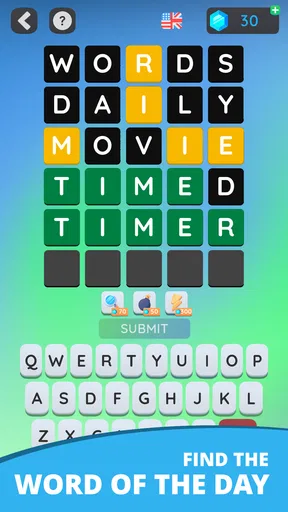
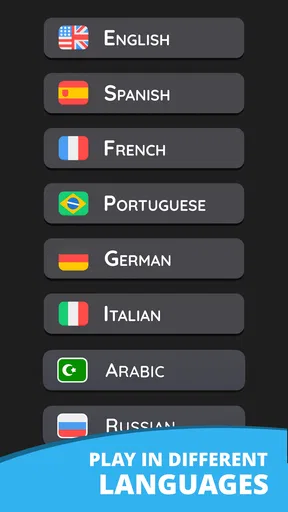
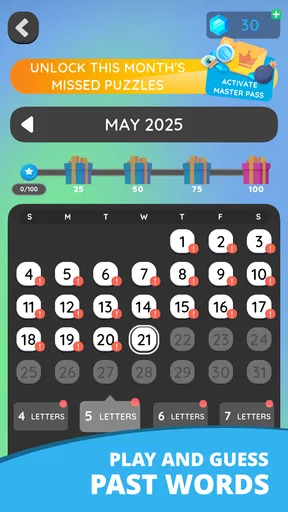
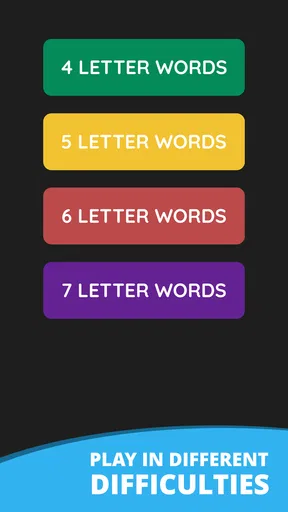
 Analysis by AppCompare
Alright, folks, gather ‘round because I've got something pretty fun to share with you today. So, I’ve been diving into the world of word games lately, and I stumbled upon this little gem called Wordling: Daily Word Challenge. If you’re anything like me, you might find yourself getting sucked into these addictive puzzles and, trust me, this one is worth exploring.
The appeal of a small, focused word puzzle
The central idea is easy to understand: work out a hidden word within a limited number of guesses. That narrow focus is the reason I find this kind of word game so easy to pick up. There is no long tutorial or complicated setup to get between me and the puzzle; the challenge is simply to make each guess count. The six-try limit gives every attempt a purpose, while leaving room to revise a first impression rather than requiring a perfect opening guess.
That structure also makes the game feel different from a crossword or a word-search. Those alternatives ask me to scan a larger field, follow clues, or spot patterns among many letters. Here, I’m making a sequence of informed guesses about one answer. If I enjoy reasoning from feedback and changing my approach, that is satisfying; if I want a sprawling puzzle with lots of clues to explore, this is a much smaller experience.
Unpacking the Basics
Let’s start with what Wordling: Daily Word Challenge is all about. It’s your classic word game with a modern twist. Every day, you’re presented with a new challenge, which means you’ll never run out of fresh content. The game is designed to test your vocabulary skills and give your brain a good workout. And honestly, who doesn’t love a good challenge?
TapNation makes this free word game, which is listed for everyone and has an average rating of 3.9 from around 38,000 ratings. More than 5 million installs suggest it has found a broad audience, but the rating is a useful reminder that a simple premise will not suit every player equally. The current version is 2.13.4, and the game requires Android 7.0 or later. Optional in-app purchases range from $0.99 to $64.99 per item, so I’d keep that in mind if you prefer games with no paid extras at all.
Gameplay Experience
Jumping into the game is pretty straightforward. You’re greeted with a clean and user-friendly interface that’s easy to navigate. The daily puzzles are the main attraction here, and they do a fantastic job of keeping you on your toes. Each puzzle is a unique brain teaser, and the satisfaction of cracking them is incredibly rewarding.
The most useful way I’ve found to approach a guess-limited puzzle is to treat early attempts as information gathering, not just as shots at the answer. I try to choose a word that gives me a broad test of letters, then use whatever the game reveals to narrow the possibilities. Once I have a promising pattern, I switch from exploring lots of letters to checking likely completions. This is a practical habit rather than a guarantee: a clever guess can still go nowhere if I choose a word that tells me little.
Worth Reading Before You Choose

EA SPORTS FC Mobile 26 Is a Bigger Football Game, but It Takes Time

Flipboard Shows What News Apps Must Do Beyond the Feed

Switching to Android Auto Means Rethinking Your Driving Routine

Google Calendar Makes a Crowded Week Easier to Manage

Ludo King Makes the Most of the Minutes Between Plans

Baby Panda World Brings Quick Play to Modern Phones, but Its Game Library Feels Busy
It also helps to pause before spending another attempt. When I’m tempted to type the first word that comes to mind, I take a moment to list possible endings or common letter combinations that fit what I already know. That small reset can stop me from repeating an unhelpful strategy. The game’s limit makes this kind of deliberate play more rewarding than rushing through guesses, especially when I’m solving between other tasks.
There’s also a cool feature where you can compete with friends or other players globally. It adds this extra layer of excitement because, let’s face it, a little friendly competition never hurt anyone. Plus, you get to brag about your superior word skills. Winning!
That competitive angle is best treated as a side dish rather than the reason to install the game. I’d enjoy comparing results with a friend who already likes word puzzles, but I wouldn’t assume that every player wants a social challenge. If you prefer solving privately, the core appeal remains the act of testing and refining your guesses. And if you do share a result, the most interesting conversation is often about the reasoning behind it, not simply who finished first.
Design and Aesthetics
The design of the app is sleek and minimalistic, which I totally dig. It doesn’t bombard you with unnecessary clutter or ads, allowing you to focus solely on the word challenges. The graphics are crisp, and the color scheme is pleasing to the eye, making it a joy to play for extended periods.
For me, the restrained presentation suits a game built around close attention to letters. It keeps the puzzle at the center and makes a short session feel straightforward: open the game, focus on the word, and put it down when I’m done. That makes it a natural fit for a coffee break or a quiet moment while waiting. I would not choose it when I’m looking for a visually elaborate game or a story to follow, because its appeal is concentrated in the puzzle itself.
Features That Stand Out
One standout feature is the hint system. If you ever find yourself stuck on a word, there’s an option to get a little help without making you feel like you’re cheating. It's the perfect balance between challenging and fair play.
I’d save a hint for the point when I have genuinely run out of useful ideas, rather than using it as soon as a puzzle becomes awkward. First, I can review which letters I’ve tested and which possibilities are still open; then I can decide whether a nudge would help me move forward. That keeps the puzzle feeling like my own solve, while making the hint a way out of a dead end instead of a shortcut through every difficult moment.
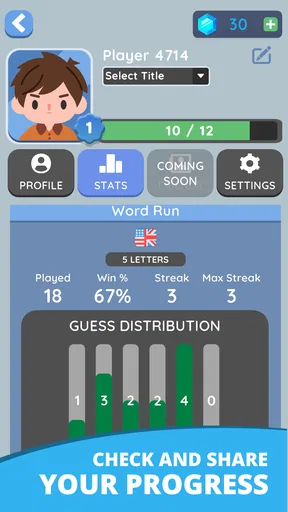
Another cool aspect is the ability to track your progress over time. You can see how you’re improving, which is super motivating. Plus, it keeps you coming back for more because who doesn’t love seeing their stats go up?
Progress tracking is most useful when I treat it as a personal reference, not a verdict on whether I’m good at words. A difficult puzzle can depend on knowing an unusual word, while a familiar one may be solved quickly through sound reasoning. Looking back over my results can help me notice whether I tend to rush or whether I often need a hint, but it is not the same as a full vocabulary lesson. If my goal is structured language study, I’d choose a tool built specifically for learning and practice instead.
Making it fit an ordinary day
A realistic use for this game is a short break when I have a few quiet minutes but don’t want to begin something that needs a long commitment. I can make a guess, think through the feedback, and decide whether to continue or return to the puzzle later. That makes it less demanding than a long-form crossword session, though it still asks for enough attention to make each try worthwhile. I wouldn’t recommend opening it while I need to concentrate on a conversation or another task: the puzzle is brief, but its reasoning works best when I can give it a moment of focus.
It can also work as a low-pressure shared activity. Two people can suggest possible guesses and explain why they think a word fits, which turns a solo word challenge into a quick bit of collaborative reasoning. The trade-off is that a shared solve may take away the satisfaction of working it out alone. I’d agree on that beforehand if I were playing with someone who cares about solving independently.
Where it fits among word games
Compared with crosswords, Wordling’s appeal is its smaller scope: I’m concentrating on one concealed answer rather than moving across a grid of clues. Compared with word searches, it asks me to infer rather than simply locate a visible word. Those differences make it an appealing choice when I want a compact deduction puzzle, but they also define its limits. Players who want a large variety of clue types, a growing collection of boards, or a more substantial solo session may be happier with a crossword or another word-game format.
The daily rhythm is another point to consider. A new challenge gives me a clear reason to return, but it can make the experience feel repetitive if I’m hoping for a wide range of modes within one app. I’d choose it for the simple ritual of tackling a word puzzle, not as an all-purpose replacement for every kind of word game. If that focused loop is what I want, the restraint is a strength; if I need constant novelty in the mechanics, it may not hold my attention for long.
Who is likely to enjoy it?
The game is a good match for people who like testing a hunch, learning from a wrong guess, and trying again with better information. It can suit casual players who want an approachable puzzle and word-game fans who enjoy comparing their results. The age rating is Everyone, so its presentation is intended for a broad audience, though a player’s enjoyment still depends on being comfortable with word-based deduction.
I’d suggest skipping it if you dislike being limited in how many guesses you get, find daily puzzle routines tiring, or mainly want to learn new vocabulary through definitions and examples. It is also not the best choice for someone who wants a deep campaign or a highly varied set of activities. In those cases, a crossword app, a word search, or a dedicated vocabulary-learning game could better match the reason you’re looking for an app in the first place.
Why You'll Love It
The most appealing part of Wordling: Daily Word Challenge is its ability to engage players of all ages. Whether you’re a seasoned wordsmith or just looking for a way to pass the time, this app caters to everyone. Plus, it’s a great way to improve your vocabulary without feeling like you’re doing some boring old homework.
I’d describe the benefit more as practicing word recognition and deduction than as a promise of measurable vocabulary growth. The game gives me a reason to think about possible words, but a puzzle alone doesn’t explain every unfamiliar answer or teach its meaning in depth. I enjoy it as a playful mental exercise; if I want to remember new words, I’d make a point of looking them up and using them elsewhere rather than expecting the game to do that work for me.
And let's not forget the social aspect. You can easily connect with others, share your achievements, and even challenge them to beat your scores. It’s a fantastic way to bond with friends or family over something fun and educational.
For a group, I’d keep the competition friendly and focus on how people reached their answers. Someone with a smaller vocabulary may still make excellent deductions, while a familiar word can give another player an easy advantage. That makes discussion more fun than treating every result as a direct measure of skill. If the people around me are not interested in word puzzles, I would not count on the social side alone to make the app worthwhile.
Wrapping It Up
So, should you give Wordling: Daily Word Challenge a go? Absolutely! It’s a delightful blend of fun and challenge that will keep you coming back for more. The daily puzzles are addictive, the design is top-notch, and the community aspect adds a layer of fun you didn’t know you needed. So go ahead, download it, and let your love for words take over. Happy word hunting!
My recommendation comes with one clear qualification: I’d try it if the six-guess deduction format sounds enjoyable, not because I expect it to replace a whole library of word games. It is free to start, while optional purchases are available, so I’d check the purchase prompts carefully if I want to keep spending under control. For a quick puzzle habit built around thinking before each guess, it has an easy-to-grasp appeal; for players who need richer variety or formal vocabulary lessons, another kind of word app will be a better fit.
Pros
- Engaging daily word puzzles
- Improves vocabulary skills
- Simple
- intuitive interface
- No intrusive ads
- Offline mode available
Cons
- Limited hints available
- No multiplayer option
- Repetitive puzzle themes
- Requires daily login
- Small font size on phones
FAQs for Wordling: Daily Word Challenge
What is Wordling: Daily Word Challenge?
Wordling: Daily Word Challenge is an engaging word puzzle game available on both Android and iOS. It offers daily challenges that test your vocabulary and problem-solving skills. Players enjoy a blend of excitement and mental exercise as they guess words based on given clues, making it a popular choice among word game enthusiasts.
Is Wordling free to play, and are there any in-app purchases?
Yes, Wordling is free to download and play. However, it does offer in-app purchases that enhance the gaming experience. These can include additional hints, extra challenges, or ad-free gameplay. While these purchases are optional, they can provide an advantage or more immersive experience for dedicated players.
How does the daily challenge feature work in Wordling?
In Wordling, the daily challenge is a unique puzzle that changes every day, offering fresh content regularly. Players have a set number of attempts to guess the word using the provided clues. Successfully completing these challenges can earn rewards, and players can compare their performance with friends or other users globally.
Can I play Wordling offline?
Wordling requires an internet connection for downloading new daily challenges and syncing progress. However, once a challenge is downloaded, it can typically be played offline. This feature allows players to enjoy the game without worrying about connectivity issues, making it convenient for on-the-go gaming.
What age group is Wordling suitable for?
Wordling is designed to be family-friendly and is suitable for players aged 10 and above. The game’s vocabulary challenges are engaging for both teenagers and adults, encouraging learning and cognitive development. Parents can feel confident that the app provides a safe and educational environment for younger players.


